Raise the Roof: Help Restore the Historic Johnston House
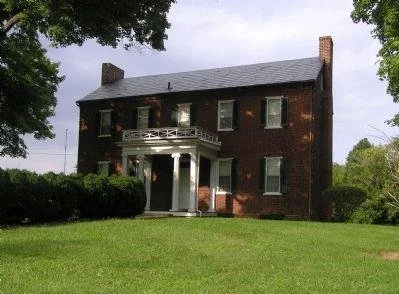
Johnston House, est. 1829
The Johnston House symbolizes resilience, innovation, and early American history in Giles County, Virginia. Built in 1829, this historic home reflects the contributions of the Johnston family, one of the earliest settlers in the region. Their legacy spans from the Revolutionary War to the Civil War, shaping the development of Pearisburg and beyond.
Raising the Roof
The roof of this historic home has withstood the test of time for a century, but now it stands in disrepair, and the entire house is in jeopardy. This beloved landmark represents a vital piece of our heritage and community spirit, and we cannot let it fade away. While we are actively seeking grant opportunities, organizing fundraising events, and exploring all possible resources, we urgently need the support of our community to preserve the oldest home in Giles County.
Every contribution, no matter how small, can make a significant difference in saving this treasured home. Together, we can ensure that this piece of our history continues to tell its story for generations to come. Let’s unite to protect our heritage and secure a brighter future for this iconic landmark!
The Arrival of David Johnston in America
The story of the Johnston House begins with David Johnston, a native of Ireland who immigrated to Culpeper County, Virginia. In 1751, he married Nancy Anne “Nannie” Abbott, the daughter of David Richard Abbott. After serving in the Revolutionary War, Johnston moved to Giles County in 1778, settling on what is now John Phlegar's farm. He played a key role in the community, serving as the constable for Montgomery County and helping to establish order in the growing frontier region.
The Johnston Family and Their Contributions
David Johnston and his wife Nannie had eight children: James, David, Andrew, Sallie, Elian, Jemima, Virginia, and Annie. Their family was among the first settlers of Giles County, and their influence would extend for generations. The Johnstons exemplified the Scottish migration to Virginia in the 1800s, bringing with them skills in farming, commerce, and governance.
James and David Jr.: A Legacy of Patriotism and Progress
David Johnston’s eldest son, James, served in the American Revolution, continuing the family’s legacy of military service. His brother, David Jr., married Sallie Chapman Miller, and together they had seven children: George, Marshall, Oscar, Chapman, Olivia, Sally, and Louisa. Their contributions to the local economy and society played a crucial role in the region’s early development.
Andrew Johnston: Farmer, Merchant, and Town Planner
Another son, Andrew Johnston, became a prominent farmer and merchant. He married Jane Henderson Johnston, and they raised five children: James Johnston, Andrew Henderson Johnston, Dr. Harvey Green Johnston, Mary Johnston, and Eliza Johnston. Andrew and his brother David made a lasting impact on Pearisburg when they were hired in 1806 to survey and lay out the town’s lots, ultimately establishing it as the county seat.
The brothers also formed a business partnership, owning farmland along the New River and operating a store and tanyard with their brother-in-law, Isaac Chapman. This venture made them among the first merchants in the town, fostering economic growth in Giles County.
The Construction of the Johnston House (1829)
In 1829, Andrew and David Johnston built the now-historic brick house in the heart of Pearisburg. Andrew and his family lived in the house, while David resided outside of town. When Andrew passed away in 1838, his will described the property as consisting of 40 acres, plus half an acre for the house, barn, and yard, as well as 10 acres of pastureland across the wagon road.
The Civil War and the Johnston House
During the Civil War, the Johnston House played a pivotal role. Local histories recount that Brigadier General Rutherford B. Hayes used Dr. Johnston’s medical office as his headquarters during the conflict (the office is now on the site of the museum). The war deeply impacted Giles County, and the Johnston family’s home stood as a silent witness to the upheaval and transformation of the region.
The Later Years and Inheritance of the Johnston House
Following Dr. Harvey Johnston’s death in 1881, the house was inherited by his second wife, Mary Halsey Johnston. Over the years, the home continued to be an important historical landmark, reflecting the changing times and the enduring legacy of the Johnston family in Giles County.
Preservation and Legacy of the Johnston House
Today, the Johnston House remains a treasured historical site, maintained by the Giles County Historical Society. Its preservation serves as a tribute to the pioneering spirit of the Johnstons and their immense contributions to the town’s development. The house represents early American architecture and the resilience and dedication of the people who helped shape the region.
Conclusion
The Johnston House is more than just an old brick structure—it is a testament to the courage, perseverance, and ingenuity of the Johnston family, from David Johnston’s service in the Revolutionary War to Andrew and David’s roles in establishing Pearisburg. Visitors and historians continue to honor and explore this remarkable piece of Virginia’s history. Let’s do our part to save our history. Donate today to our Raise the Roof Capital Campaign. GO FUND ME