“Miss Melinda”: The Bronze Cannon That Has Become a Living Piece of History
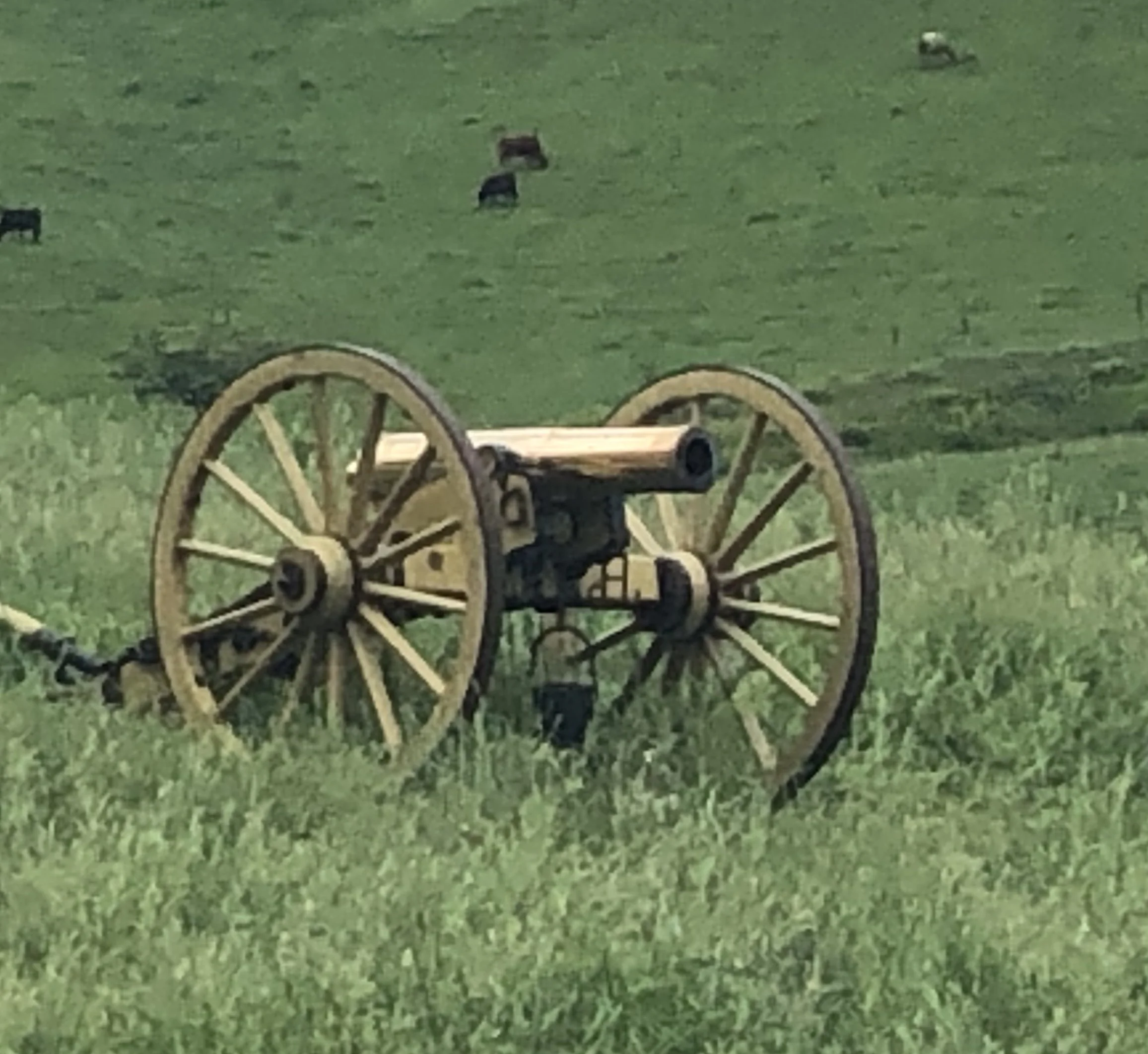
“Miss Melinda” Cannon
There are Civil War enthusiasts — and then there is Bob Tabor. For roughly two decades, Tabor has been the devoted steward of a remarkable piece of American military heritage: a full-sized, solid bronze reproduction of the Model 1841 12-pounder howitzer, the very type of cannon deployed by Confederate forces during the Civil War. He calls her Miss Melinda.
When people describe Giles Artillery as being “as seen on TV,” the phrase is not mere embellishment. The group has been regularly featured on the Smithsonian Channel in programs such as Aerial America: West Virginia, Aerial America: Roadside Attractions, and Aerial America: The South, bringing regional history and living-history traditions to a national audience.
A Cannon With a Pedigree
The M1841 12-pounder howitzer was a bronze, smoothbore, muzzle-loading artillery piece adopted by the United States Army in 1841 and employed during both the Mexican–American War and the American Civil War. The Confederate States also manufactured and utilized the weapon throughout the conflict.
Miss Melinda is a faithful, full-sized reproduction of this storied artillery piece. Her barrel alone weighs 788 pounds of solid bronze — a testament to both historical authenticity and the immense logistical effort required to transport and operate her.
The cannon itself carries an unusual manufacturing story. The barrel was cast in Ashland, Kentucky, by noted cannon maker Marshall Steen, one of the premier producers of reproduction artillery in the United States. Because solid bronze barrels of this size had to be poured vertically, the process proved exceptionally costly and time-consuming. Steen ultimately produced only two such barrels. Miss Melinda bears barrel number 18; the other remains in private hands and has never been fired.
Becoming a Steward
Miss Melinda’s journey to Bob Tabor began within the Civil War reenactment community. Pat Robertson of the reenactment group First Stuart sought not merely a buyer, but a true caretaker — a steward who would preserve and actively interpret the cannon’s historical significance. Tabor stepped forward, acquired the cannon, and gave her a name. That was approximately twenty years ago, and since then, the partnership between man and cannon has generated an extraordinary record of public history in action.
A Life of Ceremony and Commemoration
Miss Melinda has never been content to sit idle. Tabor has fired her at an impressive range of events, both solemn and celebratory. Senators and governors have requested her presence. She has sounded at bridge dedications, echoed across the Andrew Johnson historic barn dedication, and marked milestone commemorations such as the 150th anniversaries of the Battles of Gettysburg and Cedar Creek, as well as the surrender at Appomattox Court House.
Her thunder has also been heard at the Battle of Cloyd’s Mountain reenactment, at the Wilderness Road Regional Museum, and at Smithfield.
At his peak, Tabor participated in approximately fifteen events annually. Today, he limits appearances to about six per year — though the significance of those occasions remains undiminished.
Miss Melinda on a Grand Stage
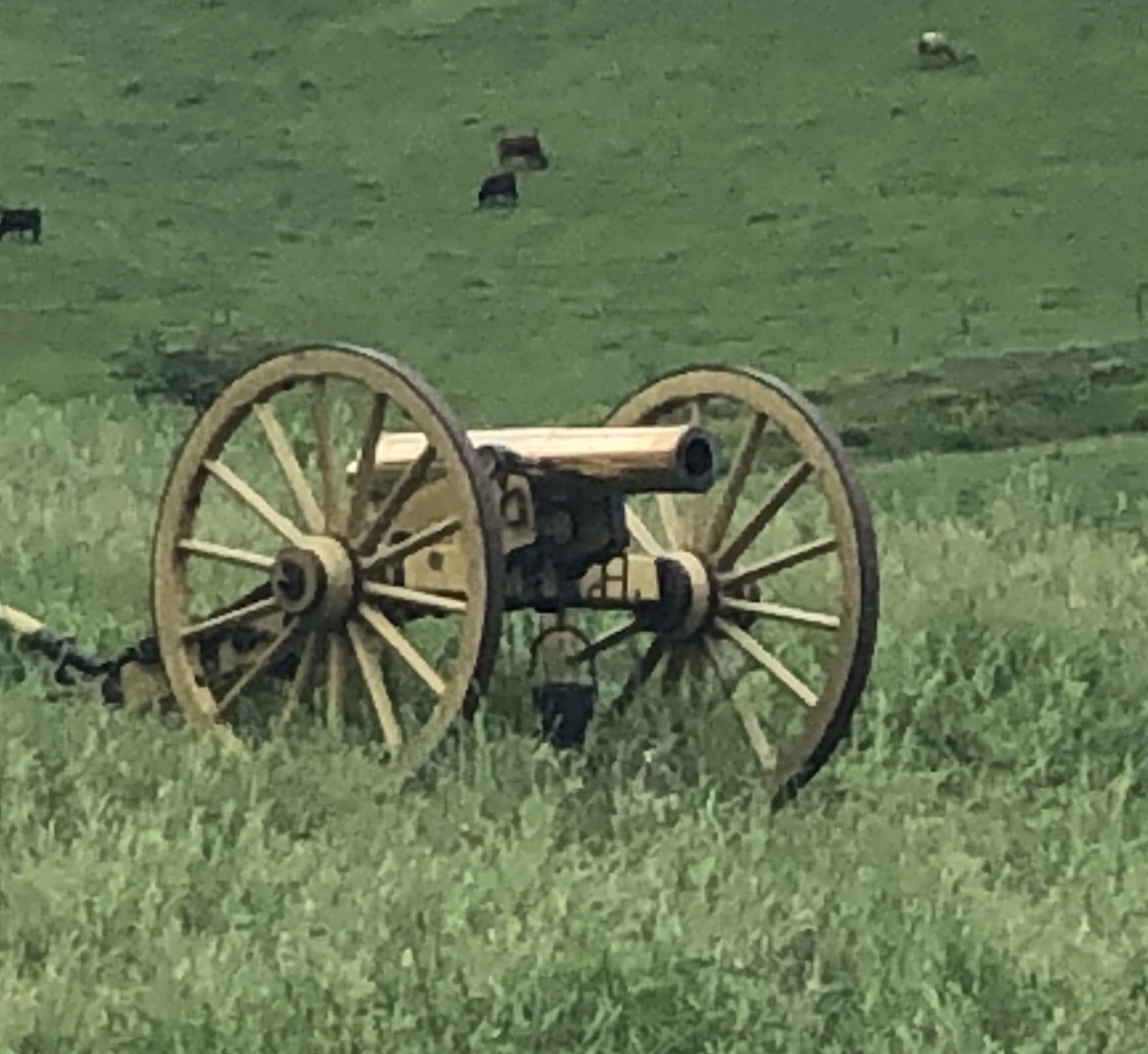
Reenactment at the Battle of Cloyd’s Mountain
Among the most memorable venues Miss Melinda has graced was the Greenbrier Classic Concert Series, held at the West Virginia State Fairgrounds in Fairlea as part of the PGA Tour’s celebrated stop at The Greenbrier resort in White Sulphur Springs. The tournament’s concert series featured world-renowned performers including Toby Keith, Lionel Richie, Bon Jovi, Aerosmith, Brad Paisley, Carrie Underwood, and Kenny Chesney.
Crowds often swelled to between 40,000 and 50,000 spectators — the largest audiences Miss Melinda has ever addressed. Firing a Civil War cannon before tens of thousands gathered for a major musical performance remains, by any measure, an unforgettable experience. It demonstrated how far a Tennessee-made bronze cannon and one committed steward could travel from the reenactment circuit to one of America’s most prominent entertainment stages.
The Cannon That Sent a Man Off in Style
Perhaps the most unusual moment in Miss Melinda’s history occurred at the funeral of Jim Cochrane. Honoring the deceased’s wishes, Tabor fired the cannon as a final farewell — an exit befitting a man remembered for living boldly.
Weddings have also become a unique specialty. When couples are offered the opportunity to fire Miss Melinda, Tabor notes that the bride invariably accepts.
“Bombs Bursting in Air” — Literally
During patriotic ceremonies, Tabor has perfected a signature moment: firing Miss Melinda precisely when The Star-Spangled Banner reaches the line “bombs bursting in air.” The dramatic timing reinforces the emotional power of the national anthem and provides audiences with an unforgettable sensory connection to history.
Not every appearance has gone entirely according to plan. At one event in Bulls Gap, Tennessee, the cannon’s thunderous report startled nearby livestock into a stampede — a reminder that even in the twenty-first century, authentic artillery commands respect.
The Art and History Behind the Trigger
Tabor is meticulous about historical accuracy. He emphasizes that reenacting the Civil War differs from portraying Revolutionary War artillery practice. Civil War reenactors use percussion primers for ignition, while Revolutionary War artillery relies on a slow match — a length of smoldering cord used to ignite the charge. Though seemingly minor, such distinctions are central to authentic interpretation.
Looking Ahead to 2026
As the nation approaches its 250th anniversary in 2026, Miss Melinda’s calendar remains active. Rather than returning to Gettysburg, Tabor plans to bring the cannon to Narrows Park for the Fourth of July celebration, offering a local tribute to a national milestone. He is also scheduled to participate in an Appomattox commemoration in April.
A Cannon, a Legacy, and a Graduation
Of all the moments Tabor has shared with Miss Melinda, one stands apart for personal significance. At his son’s graduation from Narrows High School, Tabor fired the cannon as his son’s name was announced. Smoke drifted across the stadium. It was, he says, the most meaningful shot he has ever taken.
From his earliest event at Mount Airy to his farthest journey to Hancock, Maryland, Bob Tabor and Miss Melinda have traveled thousands of miles and fired hundreds of rounds in the service of public memory, community ceremony, and historical interpretation.
In an era when history is often experienced through screens, there remains something irreplaceable in the visceral crack and rolling thunder of a 788-pound bronze cannon — and in the dedication of the man willing to bring her wherever history calls.